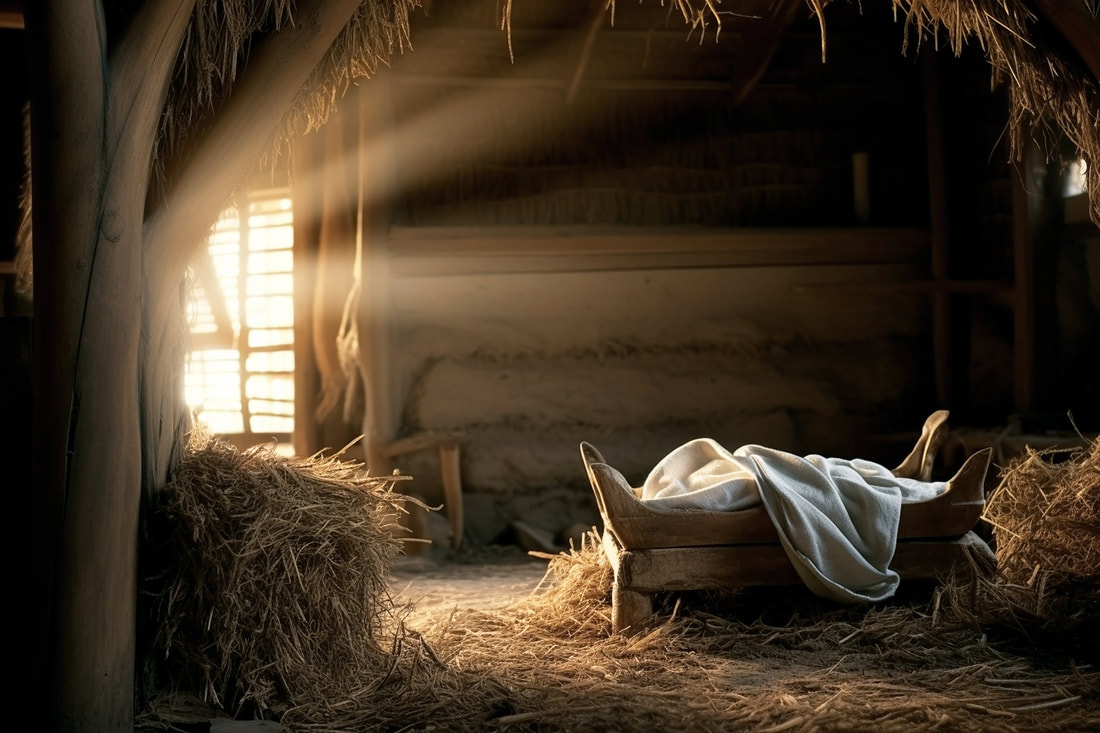
 Scavenger hunts are a fun activity but they do require a lot of energy plus a good eye as I found out when my teen group was given a list of items we needed to complete. Our biggest challenge was the fact that it all had to be caught on video via the camcorder we were given(those were the days before cell phones had good cameras!). I remember going all over town, from the local mall where one of the guys had to propose to a manikin (definitely memorable) to having to get three cars to honk (slightly embarrassing). In many ways scavenger hunts are designed to create memories and encourage us to do something we never did. On the first Christmas so many years ago there was a group of shepherds who were about to go on the first Christmas scavenger hunt only theirs would lead to a life changing encounter.
“And there were in the same country shepherds abiding in the field, keeping watch over their flock by night.” Luke 2:8 Though they are key to any Christmas play, the shepherds rarely have a leading role or even a speaking part. I believe the sheep are more noticed than they are and get a bonus line or two. In the Gospel of Luke, however, these simple keepers of the flocks are critical to the story and teach us something about pursuing truth. A list of clues That first Christmas night started out like any other boring evening as these sheep guardians prepared for another round of guard duty over their fluffy companions. They never could have guessed the events they would witness, ones that would be retold and replayed for thousands of years. They had no idea of the impact it would have on the world. Perhaps what would amaze readers more than anything is the fact that they were even part of it at all. These were shepherds, no one of importance yet they were the chosen audience to hear the news that the Prince of Peace had finally come to earth as well as the first to declare the news of Jesus’ birth to the world. Though considered a lower or inferior class by many, they were anything but as they took in the heavenly message. They immediately understood that the Lord had revealed a great revelation to them. “…Let us now go even unto Bethlehem, and see this thing which is come to pass, which the Lord hath made known unto us.” Luke 2:15 They didn’t pause to wonder if this was really true, that what they had seen was perhaps a figment of their imagination. They saw and believed without question or reservation. This realization led them to forsake their flock, their livelihood, in order to pursue the truth of what had just been told to them by the angel. They walked away from their responsibility to see a miracle, a promise fulfilled. What is interesting to note is the fact that while the angel told them to go and see he did not give them a direct address, only a few clues.
Consider what was involved in this scavenger hunt, after all, they did not have a star to guide them as the wise men did. They had to look all over town asking, seeking, and knocking. What a sight they made, these humble shepherds going around looking for a newborn baby who fit the exact description given them by the angel. True to their trade, these shepherds diligently sought to find the Babe and when they did they were quick to tell others. May we follow the example of these lowly shepherds who left all behind in order to pursue the truth of the heavenly message. We too have been given the good tidings of Jesus Christ, the redeemer of all people and tasked with the same mission as these Bethlehem flock keepers: “And when they had see it, they made known abroad the saying which was told them concerning this child.” Luke 2:17 May we be willing to leave behind whatever is holding us back. May we be discerners of truth just as they were and always be in relentless pursuit. Let’s be busy making the Good News known abroad this Christmas and all year long telling other lost sheep that the Good Shepherd has come for them!  I heard my Sunday school teacher say that she shared with her neighbors some of her tomatoes which her garden seemed to have in abundance. Her desire was not only to be kind but also cultivate opportunities to speak with neighbors about the Lord. She made the comment, “The Lord has given me this ministry of tomatoes” and that grabbed my attention. It made me stop and consider that the things we have are not given to us only for our benefit. Our possessions are to be used for God’s glory and my teacher recognized that her surplus of tomatoes could be a blessing to her neighborhood but also open the door for important conversations.
God's philosophy of wealth The American dream is based on the idea of equality, that no matter who you are you can achieve success and status. While there is nothing wrong with making money and enjoying the benefits it brings, the problems begin when we are consumed by it or consume it only upon ourselves. God’s view of wealth is different from ours. In our minds wealth means we can live lavishly but I think the believers in the church of Acts who had surplus had a mentality that was more in line with God’s philosophy of wealth. And all that believed were together, and had all things common; And sold their possessions and goods, and parted them to all men, as every man had need. And they, continuing daily with one accord in the temple, and breaking bread from house to house, did eat their meat with gladness and singleness of heart, (Acts 2:44-46) Those who had extra quickly liquidated it so they could distribute it to those in need. I want to make it clear that I am not saying we have to sell all of our extra and give it away or that we cannot spend money on ourselves. What I am saying is that we should always be ready to help meet a need whenever we are able. This first congregation was ready to help those who were in a financial strain. Maybe they had lost a job, a crop failed, or there was an illness. Whatever the need, this group of believers was there to be a blessing. Means of distribution I remember hearing someone say that God likes to pour into a bag with holes meaning He desires for His people to be a means of distribution. Consider for a moment one of the Old Testament ways of providing for the poor and the widows. At harvest time, those with fields were not to glean every single stalk but leave the corners and let them follow behind to gather the pieces that fell from the workers. This was one of the ways God met the needs of His people through others. The New Testament believers were updating the method of provision by intentionally giving to those in need instead of investing more in themselves. These acts of care and compassion surely did not go unnoticed by the community. Imagine what went through the mind of the person who bought from one of the believers and heard that they were selling so they could help someone else. To a lost individual that must have seemed crazy but it also illustrated the transformation that takes place in the life of someone who is saved. Our life is meant to be a testimony of what happens when Jesus is King or at least, it should. If we live for ourselves, hoarding the resources God has given to us instead of asking Him how we can best use it for His glory, are we making an impact? I desire to be a funnel, a bag with holes that God can use to meet the needs of others and perhaps be an answer to prayer. My possessions are not mine, they have been bestowed upon me so that, yes my needs are met, but also so I can help others when I am able. An real life illustration When I was a teenager, my mom came home after paying a call to a new visitor in our church. She and her friend were greeted by a young mom of three whose husband was currently deployed. This mother was embarrassed to invite them in because there was barely any place to sit not because the house was messy but because there was no furniture. Bill collectors had come and taken most of their belongings including beds for the children. When my mom shared this with my dad, they immediately went into action. We packed our spare bedroom set from the guest room including the mattress, bedding, and decorations along with an extra desk and computer. We phoned another couple in our church and asked if they could help. They gave us a bunk bed along with a few other items. My parents also went out and bought some additional furnishings and delivered it to this family. She was a puddle of tears as she watched this couple she didn’t know provide a desperate need. This mother continued to come to church and soon opened her heart to Jesus. When her husband came home he was so moved by what these people from church had done that he attended a service and gave His life to Christ as well. The last we heard they were busy serving in the church and raising their children to God’s glory. A ministry of tomatoes How different this story might have been if not for some believers rallying together to meet a need by giving of their surplus, their tomatoes you might say, and even giving sacrificially. May I be so bold as to say, there is no place for hoarders in God’s kingdom, only givers. This does not mean we give to every need we see or read about. After all there are countless advertisements in the mail and on television vying for our money but we should be ready to give as God leads. We can also be a mediator like when my parents brought this need to the attention of others who joined in giving. We may never know the eternal difference our gift makes when we let God guide our giving but may we live eager to obey. May we recognize that what we have is also a gift from Him, our ministry of tomatoes.  Little Italy and Chinatown are two neighborhoods located in the lower Manhattan area of New York City. Famous for its diversity, the Big Apple is host to these two little pockets that allow residents and tourists alike to enjoy the culture of another country. From food to language, the immersive experience draws people to sample just a tiny portion of what this country is all about. Those who walk through these mini-countries delight in what they discover yet they would not be able to if not for someone carefully creating them. What caused their origin? It began with a longing for the old country. These immigrants who made the bold and brave choice to leave their homeland for a chance at a better life found themselves lost in a new county and left with a yearning. While they crafted a life for their families their desire for the old ways and comforts were so strong that it caused them to surround their part of town with the familiar. In the middle of another country, another soon was nestled inside, enabling those who had never been to get a little taste.
Heavenly Citizens In chapter three of Philippians, Paul reminds the congregation of believers that they were not citizens of this world. “For our conversation is in heaven; from whence also we look for the Saviour, the Lord Jesus Christ.” Philippians 3:20 The word “conversation” means community or citizenship. Paul wanted the Philippians to remember that they were merely resident aliens of Earth. Their citizenship was in heaven which is theirs, as well as ours, true homeland. This thought caused me to consider something. Those immigrants in New York City, who landed there so many decades ago, deeply longed for the old country which drove them to build a community within a community that was woven with the familiar elements of home. Shouldn’t we, as citizens of heaven, have such a longing for heaven that it causes us to create a home that reflects heaven on earth? A choice to be different Those who came by sea could have chosen to immerse themselves in this new and unique land. They could have embraced their ways of doing things, adopted their language, and eaten their food but the love of their own beautiful heritage and culture was greater. Of course, they were good residents in this new country and sought to obey the laws and contribute to their new community but they still held true to their own values. Because of this desire, others now experience a taste of their country. As citizens of heaven, our homes should be a small taste of heaven to all who enter. Both family, friends, and guests should know that Christ reigns in this home. What does it take to craft a heaven-minded home? It begins with yielding our home to God and walking in the Spirit. There is something else that is needed, a desire. The immigrants of old never forget their heritage or their old homeland. Even though they embraced life in America they still craved the familiar. Can we say that we long for the things of Heaven? Are our eyes lifted heavenward toward the things above or are we finding our delight in the things of earth? Those who crafted Little Italy were good residents of New York City but they did not want to lose who they were. That is what can happen when you immerse yourself in what is around you. As believers, we can never lose our salvation but we can lose our identity by choosing to embrace the world’s philosophies and appearances over Christlikeness. The more we adapt to the world the less impact we have in it for Christ. A Necessary Ingredient Familiarity is a necessary ingredient when building a heaven-minded home. The immigrants were familiar with the qualities and characteristics that made their culture theirs. We must do the same by spending time in the Word of God. This is how we became familiar with the needful elements such as the fruit of the Spirit. A heaven-minded home contains love, joy, peace, longsuffering, gentleness, goodness, faith, meekness, and temperance. It is a home where things like anger, envy, bitterness, and slander are absent. Instead, kindness, forgiveness, and tenderness thrive and are liberally used by every person who resides there. This is a home where the Bible is not just read but cherished and applied to every situation. Prayer is also a key component in this home. Impacting the world Just as Little Italy and Chinatown give visitors a taste of the old country, a heaven-minded home should let every guest experience a little bit of heaven on earth. What would happen if they did? Many who have walked these unique sections of New York City felt a desire stir inside of them to go and visit the original countries that served as the inspiration. It is the ideal marketing campaign. Would those who came to our homes desire to go to heaven based on what they experienced? Would they want to know more about Jesus because of how we lived our lives? I believe it should, which is why how we live our lives as resident aliens of earth matters. As long as we reside here we should make every effort to create a little bit of heaven around us so that we encourage fellow believers to stay upwardly focused and be a witness to those who are lost. |
New Product now available!
Categories
All

Sarah GraceI am just an ordinary girl who is loved by an extraordinary God and I seek to love others the same way. I love to bake, read, do puzzles, watch Hallmark movies, and go shopping with my mom! This blog was created as a place where I could share some thoughts that the Lord has shown me and to be an encouragement to others who desire to know Him in a deeper way. My prayer is to learn to sit still and trust God with my future. Archives
December 2023
|